OVERVIEW
One of my favorite dyeing methods
is “scrunch dyeing”, where you literally scrunch up fabric that has been pre-soaked in soda ash solution, and add dyes to create wonderful organic
patterns and color combinations. I struggled
for awhile in the beginning to come up with the look I was striving for, but
once I finally ‘got’ it, I have
been happily scrunching ever since! Somewhere along the way, I started doing a
little experimenting with alternates to the standard Low Water Immersion dyeing
method, and I found I could get some pretty interesting results, so I thought I
would do a little ‘compare and contrast’ demo here to let you see what the
different methods look like, side by side.
But first, a little ‘housekeeping’.
SAFETY FIRST
If you are an experienced dyer,
you already know the safety guidelines for dyeing, but if you are new to
dyeing, please use the following guidelines:
Only use tools that are dedicated
to your dyeing, not to be re-used for food preparation.
To ensure you do not ruin your
work area, it is advised that you cover your surfaces with plastic before
working with dyes or the auxiliary chemicals associated with dyeing, or have an
area set up that you can easily wipe down after a dye session. I work in my laundry room, so I can use rags
to wipe up after myself.
When mixing dyes, it is suggested
that you use a mask or ventilator to prevent inhalation of dye powders,
especially if you have pulmonary issues such as asthma or allergies.
Always wear rubber gloves when
you dye, to prevent staining your hands, and wear old clothing that will not be
ruined by dye splatter.
Keep rags or paper towels handy
to wipe up spills.
If you need basic 'how to' information on dyeing, I can recommend Dharma Trading Compay, where I buy my Procion MX dyes and other supplies. They are great, have an online store, as well as lots of experienced folk to help you on your way.
OKAY, ON TO THE DYEING!
For all of the following
examples, I pre-soaked the fabric pieces in soda ash solution (1 cup soda ash
powder stirred into 1 gallon hot water prior to starting my project; any unused
solution can be stored in a covered container indefinitely).
First off, I tore 4 pieces of
cotton muslin into fat quarters; then I numbered them 1 – 4, so I could keep
track of which dye variation I applied on each
Then I mixed the dyes. I chose one of my favorite color combinations: Orchid, Lilac and Avocado. I mixed them at medium strength – 2 tsp dye powder per 1 cup of water. I don’t use urea, salt or any other additives.

.
I like to store my mixed dyes in
Spaghetti Sauce jars – they have measurements on the side to help me make the
proper amount. With a few exceptions, I
can store my mixed dyes for at least several months in a refrigerator out in
the garage without them losing their strength.
I have noticed that yellows and blues tend to lose their strength sooner
than other colors. I also try to
remember to agitate the dyes a little when they have been sitting for awhile,
to mix any solids that have separated and migrated to the bottom of the
container.
Below is the soda ash container,
with the fabric soaking. I also stir the
soda ash to dissolve any solids that have settled to the bottom. I pre-soak the fabric (which was pre-washed
to prepare for dyeing) for about 15 minutes.
Then I squeeze out the excess solution and prepare to scrunch the fabric
for dyeing.
Next, I spread the fabric on the
top of my washer for scrunching:
Then I scrunch the fabric, trying
to keep the ‘peaks and valleys’ pretty even:
Once I have the fabric scrunched
to my liking, I place it in my container:
Now it’s time to dye!
1) Standard
Scrunch dyeing
I pour a small amount of my first color into a measuring cup
with a spout, then I pour randomly over the scrunched fabric:
Then I repeat with the remaining colors, usually working
lightest to darkest. Below is the first
piece with all 3 colors applied. I
batched for about an hour before I rinsed and laundered. I rinse first in cold water with a few drops
of Synthrapol textile detergent; then I wash with hot water and more
Synthrapol, and finally I rinse 2-3 times in warm water. If you do a large batch of dyes, you can do
the wash/rinse in your washing machine.
Then I dry and press.
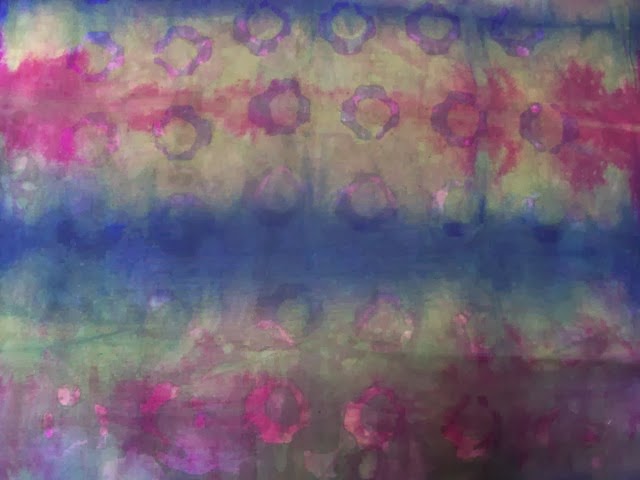
Here is the first piece:
One reason I love scrunch dyeing is that I am able to achieve light and dark, and I love the fractured patterns that frequently occur.
In my next post, we will explore a couple of variations that I have experimented with, and compare the results to standard scrunch dyeing. Stay tuned!